


Applying for conferences and presenting as a postgraduate student
Isabella Savin is starting the second year of her MSc by Research in Biochemistry at Reuben College. Her research uses very high-resolution microscope methods (‘super-resolution microscopy’) to investigate how DNA is organised within cells.
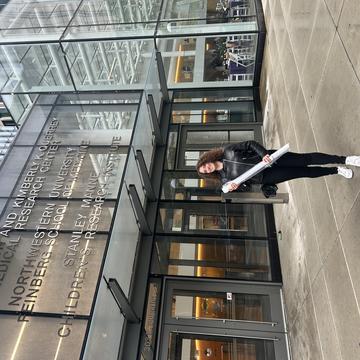
In October, she shared a poster and gave a short talk on her Master’s project at the 2025 Epigenetics Society International Conference at Northwestern University, Chicago, USA.
Here’s what she learnt about applying and presenting at an international conference.
Isabella's tips
Clarify your message
If you want to present at a conference, you’ll need to submit an abstract of your research. This is essentially a short summary of your project's methods and results so far. Don’t worry if your work isn’t finished yet!
My key advice here is to clearly explain the gap in the literature that your work addresses. What problem in your field does your project aim to solve? And what is the one main message that you want people to remember?
Also, try to avoid using overly specific jargon. My project uses a lot of specialised microscopy methods, and as this wasn’t a microscopy conference, I explained the reasoning behind why I used those methods, but not the details of how they worked.
Check funding sources
National societies sometimes offer funding for early-career students attending conferences. However, not all of these are open to Master’s students.
I therefore applied for Reuben College’s Academic Support Fund, which is available to Master’s students on taught and research courses, as well as DPhil students. I was asked to break down my expected costs (so check this in advance!) and explain how attending the conference would benefit my studies. You don’t have to write an essay, but make sure your passion for the subject comes across.
It’s also worth speaking to your supervisor or department - I received financial help from a departmental grant.
Practice makes perfect!
If your abstract is accepted for a poster or talk, congrats! Now it’s time to prepare.
My number one tip is to practise your presentation to as many people as you can. I even enlisted a friend of mine to critique my slides at Reuben breakfast one morning! Make sure you practise with people outside your field, too. They’ll help you see if there’s anything in your explanations that needs to be clearer.
Have confidence
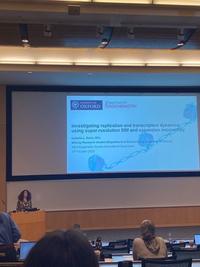
I’ll be honest: presenting at a conference is nerve-wracking. I remember waking up at 5 a.m. on the day of my talk – what sort of questions would they ask me? What if something went wrong and I had to improvise?!
But remember that nobody understands your project better than you do! You are the person who’s spent hours in the lab, or diving through the literature, or scanning books in the library. When it comes to answering audience questions, you’ll find you know more than you think. Once I started speaking, my nerves went away and I found the whole talk quite enjoyable.
Finally, talk to as many people as you can whilst you’re there and try to learn as much as possible.


