
Our ‘Bright Sparks’ clean energy workshop at Stanton Harcourt CE Primary School
A clean energy adventure for primary school children, funded by Reuben College's Public Engagement with Research (PER) Innovation Fund
On a cheerful Friday morning in July, we visited Stanton Harcourt CE Primary School with one aim: to spark curiosity about clean energy. Thanks to the generosity of the PER Fund, we delivered an interactive energy workshop to 28 eager students in Years 5 and 6.
'Bright Sparks' is a workshop we designed to help children understand how energy works, imagine life with and without electricity, and reflect on global differences in access to power. We aimed to achieve this through hands-on activities, team challenges, and stories from across the world.
Learning about energy together
We kicked off the day with an Energy 101 session. Using colourful charts and easy concepts, students discovered how energy is generated, the differences between renewable and non-renewable energy, and how electricity goes from power plants to homes and schools. This was followed by one of the day's highlights: imagining a world without electricity. In groups of four to five, students worked together to answer everyday questions such as how they would boil water, go to school, or get warm without electricity.
Then, we introduced the Energy Scramble activity. By using picture cards, students reconstructed the step-by-step processes for how different technologies (like wind turbines or hydroelectric dams) convert energy into electricity.
Global Energy Snapshots came next. Through movement and discussion, we created space for the students to explore how children from other countries have access to or lack electricity. They were very touched by a Nigerian radio clip which simulated the din of generator hums that is an everyday reality for most communities.
What the pupils taught us
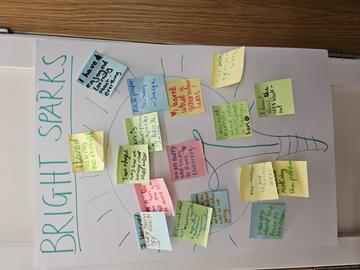
We finished the workshop with an Energy Action Tree where all of the pupils wrote one beacon idea for a more sustainable energy future. Throughout the day, the students' energy and insights were remarkable. They asked a range of questions like how electricity travels through wires, what the difference is between electric and diesel vehicles, and even how solar panels work when the sun isn't shining.
They also asked when we would return! One student even leaned over and whispered, "Can we do this every Friday?"
Their reaction was sincere enthusiasm; with 95% of them reported that they learned something new about energy.
One noted, "I didn't know I could make energy out of solar backpacks!". Another added, "I want to create electricity quietly."
These words reminded us why early, productive engagement matters. Young students are our world’s future scientists, engineers, and policymakers.
Thanks to all involved
While planning the workshop, we worked closely with the school to discuss ideas early on. This helped us work out the programme delivery and make sure the content matched the interests and needs of Year 5 and 6. On the workshop day itself, Mrs Catherine Atherstone – one of the teachers – supported us and helped the workshop run smoothly.
We are incredibly grateful to the school for welcoming us so warmly and providing support, especially Mrs Faye Tingley and Mrs Catherine Atherstone. Our thanks also go to the MSc in Energy Systems Course Director, Professor David Wallom, and to the Low Carbon Hub and the EPA Trust for facilitating the school connection and supporting workshop development.
This experience showed how creative education can help make complex ideas into something easy to understand. We hope this effort inspires countless other initiatives, because every child deserves the tools and the motivation to help create a brighter, cleaner world.


