
#MakingHistory: Sitara Brooj Akbar
Reuben College may not have centuries of tradition, but our community is making history in real time. For Women’s History Month, we're sharing the stories of some of our women shaping the future.
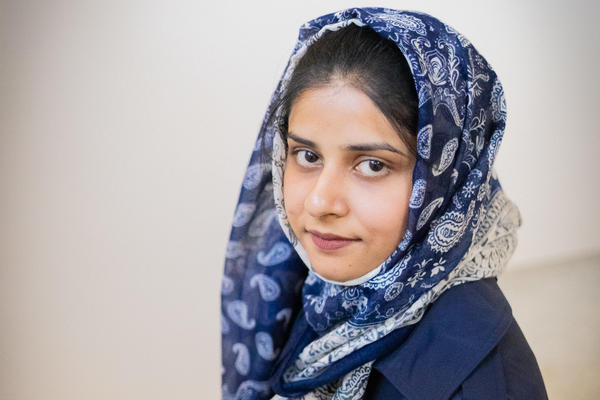
Sitara Brooj Akbar (MSc in Precision Cancer Medicine, 2021) was part of Reuben College’s first cohort. Now based in the United Arab Emirates, she’s building impact across education access and refugee rights.
Q&A with Sitara Brooj Akbar
So Sitara, tell us a bit about your story.
I’ve always been inspired by polymaths who weren’t afraid to think beyond a single field. I did my GCSEs early (at 11 and 13) and I spent four years studying financial crime and law before starting my undergraduate degree in Biomedical Science. After my MSc at Reuben, I returned to Dubai to complete another Master’s in Law before starting my PhD.
I’ve always felt very strongly about making sure that children have the right access to education because it can be transformative. I’ve had the opportunity to collaborate with governments, NGOs and companies on projects addressing regulatory frameworks and education access.
Could you tell us more about that passion?
I started mentoring at age 13, including with the British Council and the Pakistan Youth Forum. I saw children out of school because of money, or because they didn’t have the resources or were forced into labour at an early age.
Right now, millions of such children don’t have access to conventional learning. That doesn’t mean they’re not as smart or as qualified. But if you don’t have the complete set of strict documents required, often you can’t even take an exam. So many doors close.
How are you making history?
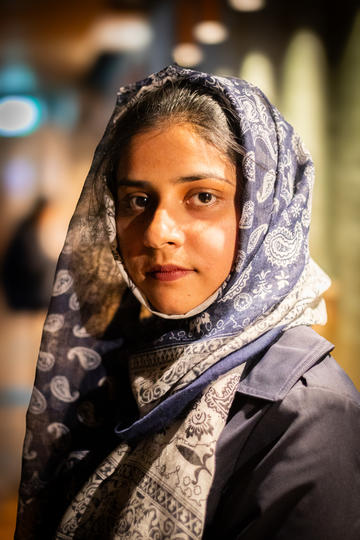
I think history can be a consolidation of other people’s efforts over time. I don’t think that it’s something that I’ve achieved just by myself; a lot of people have helped me on this journey.
During the pandemic, we started the Star Reachers Programme so marginalised children could get school-leaving qualifications. It was piloted with about 250 students, and we were able to support them all in achieving qualifications like the GED, IGCSE or A-Levels. That was a huge milestone.
I was just in Geneva, where I was invited to speak at the United Nations about access to education rights for refugee children whose learning remains invisible. More broadly, I’ve had the chance to contribute to policy discussions around education and governance, speaking at international platforms to raise awareness and create opportunities for other young people.
We often don’t realise which doors were once closed to us, because someone opened them before we arrived. Following your dreams helps create a path for others to follow theirs. And making history, especially for women, can simply be another girl looking at you and finding it a little easier to believe her own dreams are possible.
Who’s helped you along the way?
My family, who have always believed in me, and at Oxford, my supervisor, Professor Anna Schuh. She’s always been encouraging and was supportive of my sometimes unconventional approach and I’m so grateful.
Being at Reuben also opened new perspectives. The main charm was its interdisciplinarity. During Dining with Dinosaurs talks, we’d get to engage with thinkers outside of our fields and I found myself in conversations that shaped me.
Progress often happens when ideas from different worlds meet, and that, to me, is the real beauty of diversity.